Skip to content
All work

NippyBoxes

Designed an ‘Uber for deliveries’ that passed 10,000 users in its first month.

  • Product Designer
  • Customer app and partner platform
  • Research to usability testing
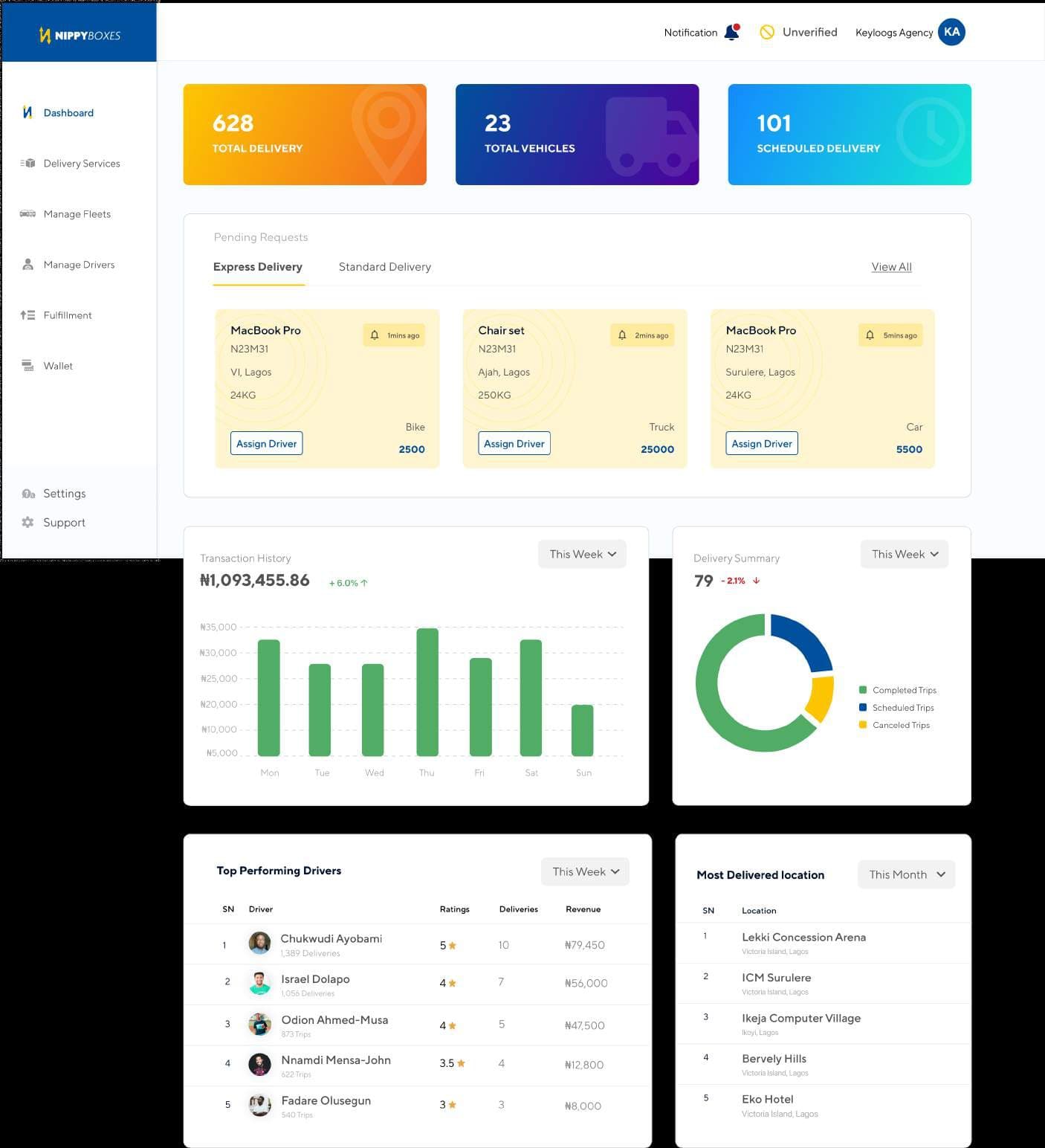
NippyBoxes partner dashboard with delivery analytics
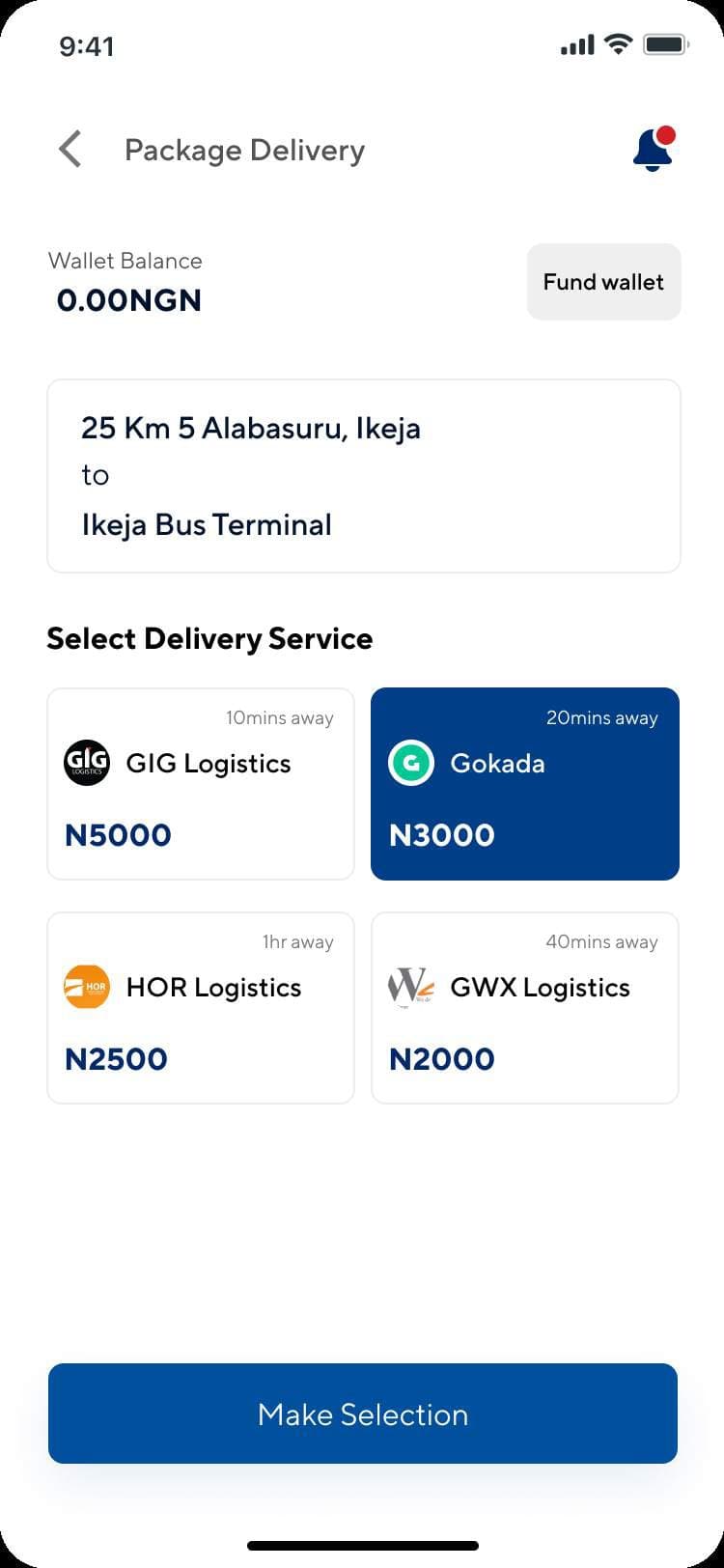
NippyBoxes delivery booking comparing prices from four couriers
The problem
People and businesses sending parcels couldn’t compare couriers, were overcharged because parcels weren’t measured properly, and rarely trusted deliveries to arrive on time.
What I did
I interviewed 15 senders, mapped flows for three user types, and designed a customer mobile app plus a web platform for fleet owners to manage vehicles, drivers and deliveries.
The result
Both sides of the marketplace showed up at launch: 50+ vendors and 200+ riders and drivers on the supply side, and 10,000+ users booking deliveries in the first month.
users in the first month
10,000+
riders and drivers at launch
200+
vendors at launch
50+
products: customer app and partner web app
2
Company
At SBSC, a software consulting agency
Role
Product Designer (UX & UI)
Team
2 designers, PM, 2 business analysts, 4 engineers
Platform
Mobile app and web app
Tools
Figma, Miro, Illustrator, Zoom

Problem & context

Sending a parcel in Nigeria meant guessing the price and hoping it arrived.

NippyBoxes is a logistics booking and management platform: a delivery company with its own fleet and an aggregator of third-party couriers, for local, interstate and international deliveries.

It had to work for three very different people: individuals sending a package, businesses shipping regularly, and fleet owners running vehicles and drivers.

Role & team

I designed across both sides of the marketplace.

  • That’s me

    Chukwuemeka Iheonye

    Product Designer

    Interviews, user flows, design system, customer mobile app, partner web app, usability testing.

  • Design

    Product Designer

    Partnered on UI and the marketing site.

  • Product & engineering

    PM, 2 business analysts, 4 engineers

    Requirements and build.

Research & insights

People didn’t want the cheapest courier. They wanted to choose with confidence.

We interviewed 15 people, a mix of small businesses and individuals, in person and remotely, and ran a survey on which logistics platforms people use and why.

  1. 01

    No way to compare

    80% of the people we spoke to didn’t have time to check several platforms for the best price.

  2. 02

    Prices felt made up

    Inaccurate parcel measurement led to overcharging.

  3. 03

    Tracking was guesswork

    Many platforms didn’t use GPS, causing problems with pickup, delivery and tracking.

  4. 04

    Trust was low

    Most participants didn’t trust that their package would arrive on time.

Process

From brainstorms to user flows to a mini design system.

  1. 01

    Prioritise

    Brainstorms with the team turned research and stakeholder requests into core features.

  2. 02

    Map

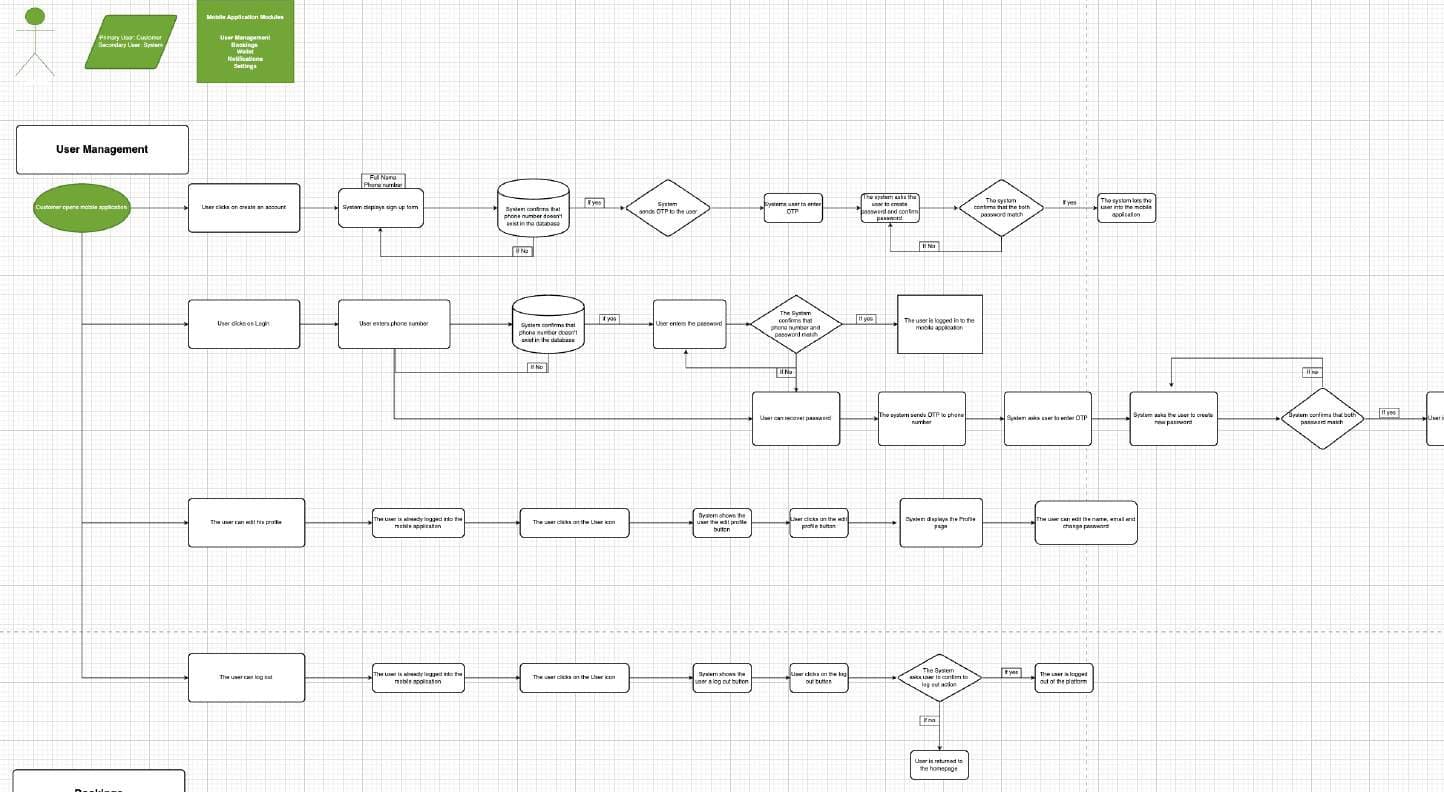
    User flows for customers, businesses and fleet partners.

  3. 03

    Sketch and systemise

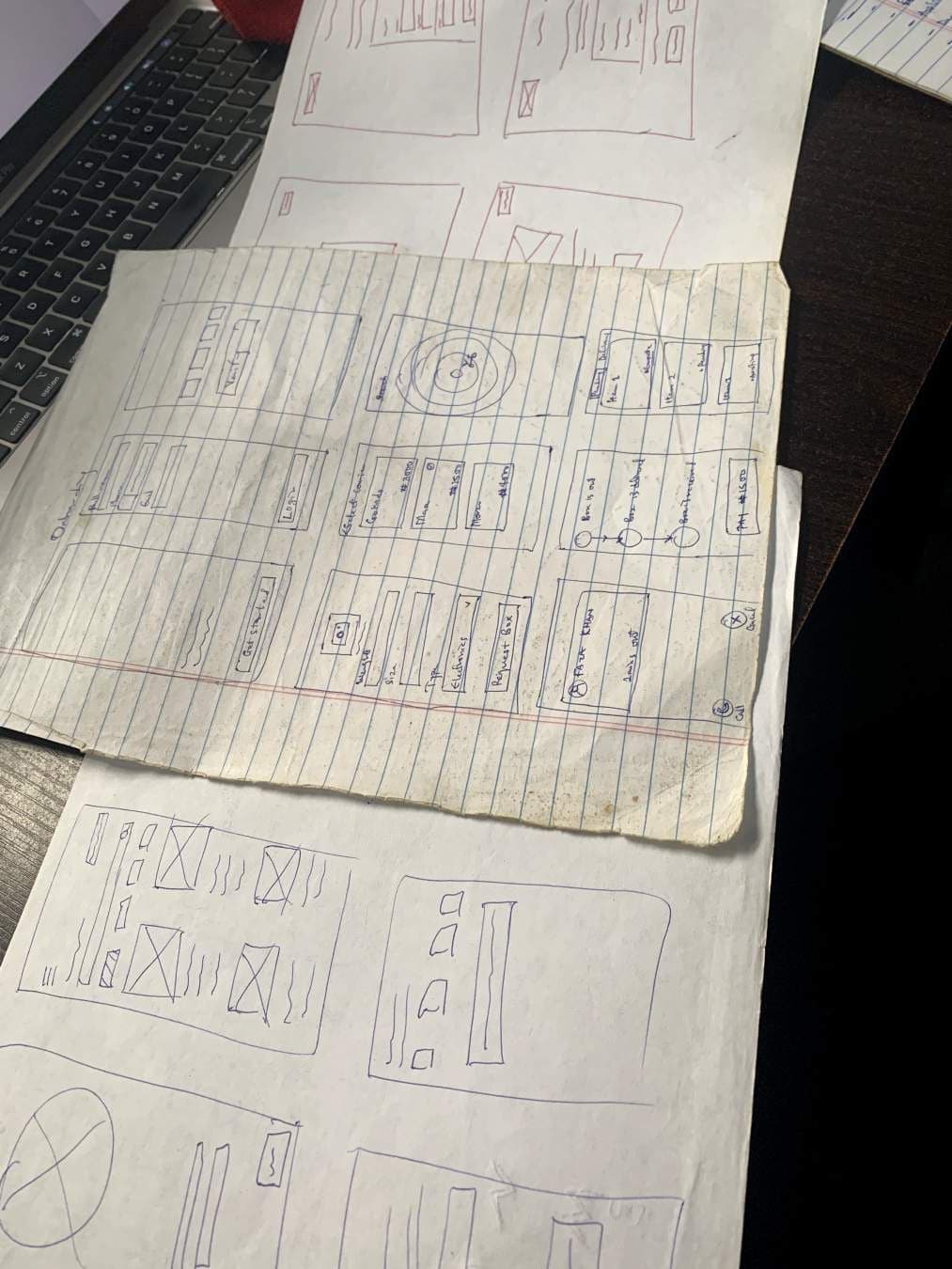
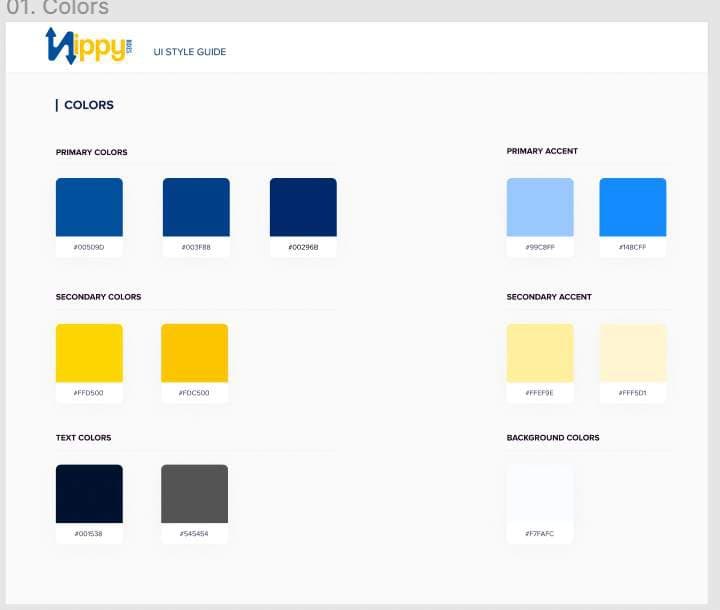
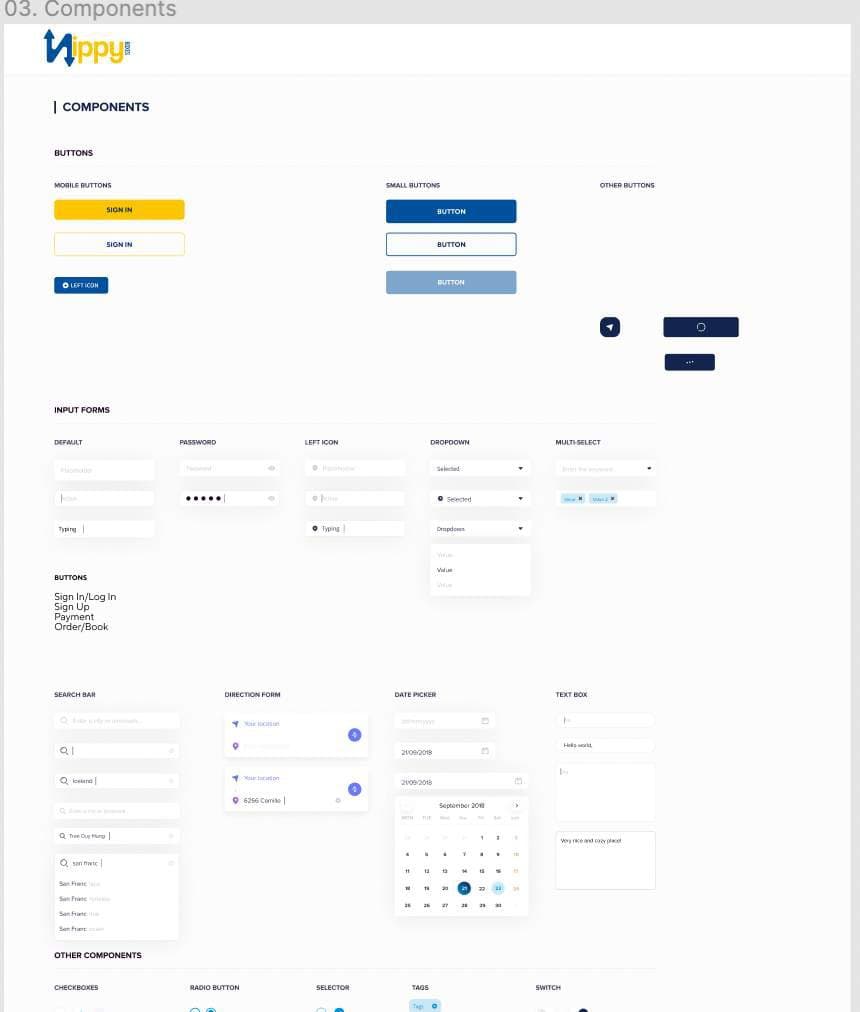
    Paper sketches, wireframes, then a mini design system for type, colour and components.

NippyBoxes user flow diagram
Mapping the booking flow.
Paper sketches of app screens
Sketching before pixels.
Colour palette from the NippyBoxes design system
Colour styles.
Component library with buttons, inputs and date pickers
Core components.

Key decisions

The decisions that made a marketplace feel trustworthy.

  1. Decision 01

    Show every courier’s price side by side

    People couldn’t compare logistics providers without visiting each one.

    What we chose
    Booking ends with a choice of delivery services, each with its price and estimated pickup time.
    Why
    Price comparison drew the most interest when we tested with users.
  2. Decision 02

    Price by weight

    Overcharging came from guessing package size.

    What we chose
    Package details and weight are captured during booking to calculate the price.
    Why
    Fairer, more predictable prices.
  3. Decision 03

    Hold payments in escrow

    Payment validates a booking, but deliveries sometimes fail.

    What we chose
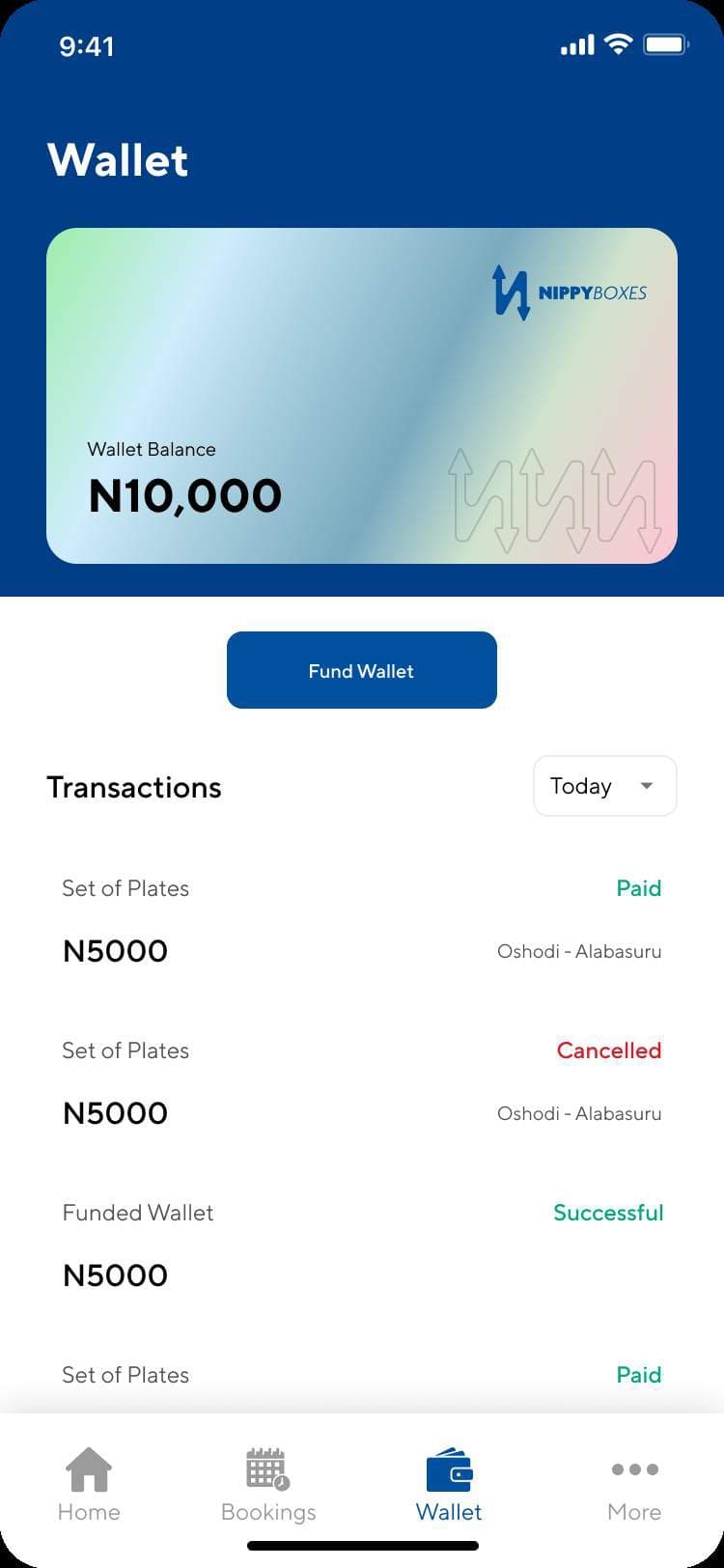
    A wallet with escrow, so refunds are straightforward when something goes wrong.
    Why
    Customers can pay quickly without worrying about getting their money back.
  4. Decision 04

    Give fleet owners their own tool

    Partners needed to onboard, verify documents and manage vehicles and drivers.

    What we chose
    A dedicated web platform with guided verification, fleet and driver management, and delivery analytics.
    Why
    The supply side of the marketplace had to be as easy as the demand side.

Mobile

For customers: book, compare, pay and track from one app.

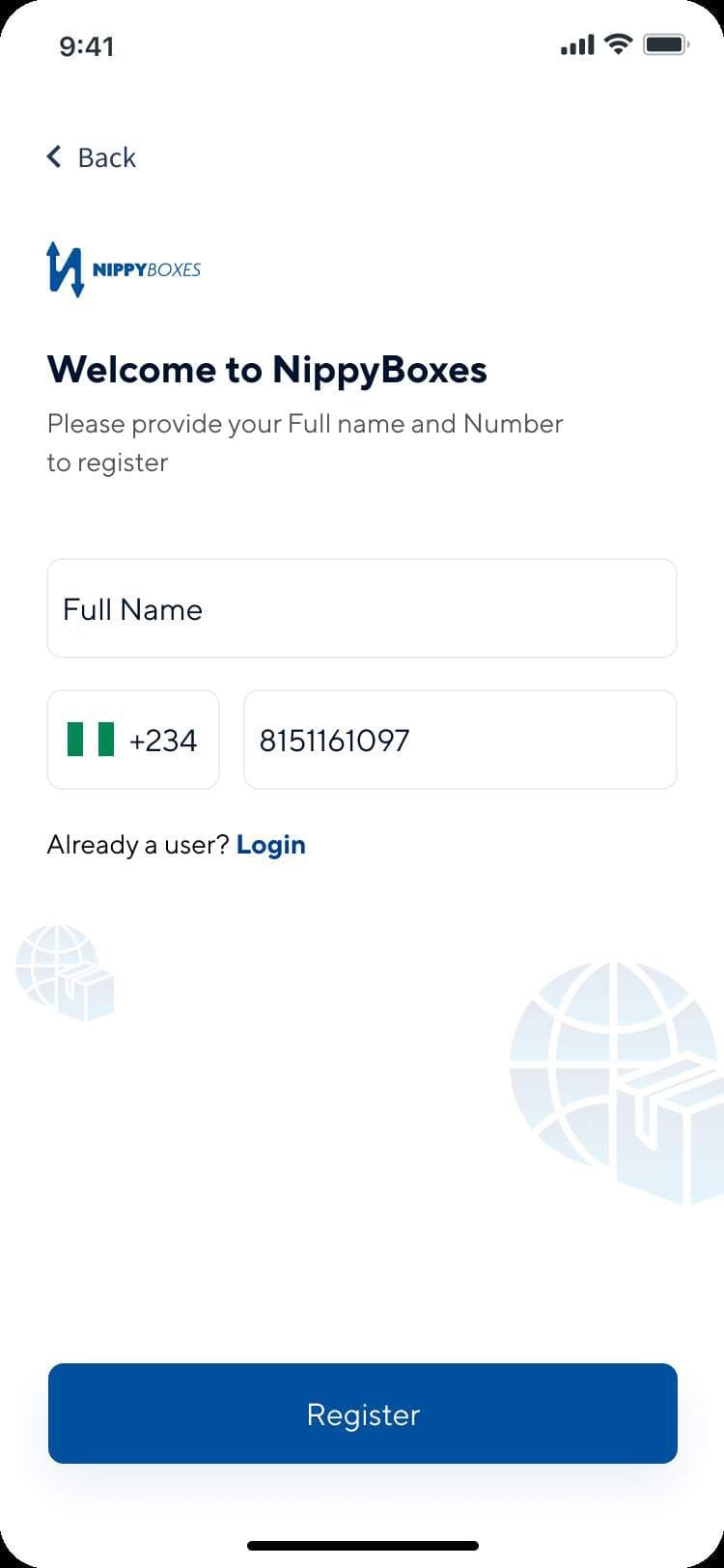
Registration with just a name and phone number
Sign up with a name and number.
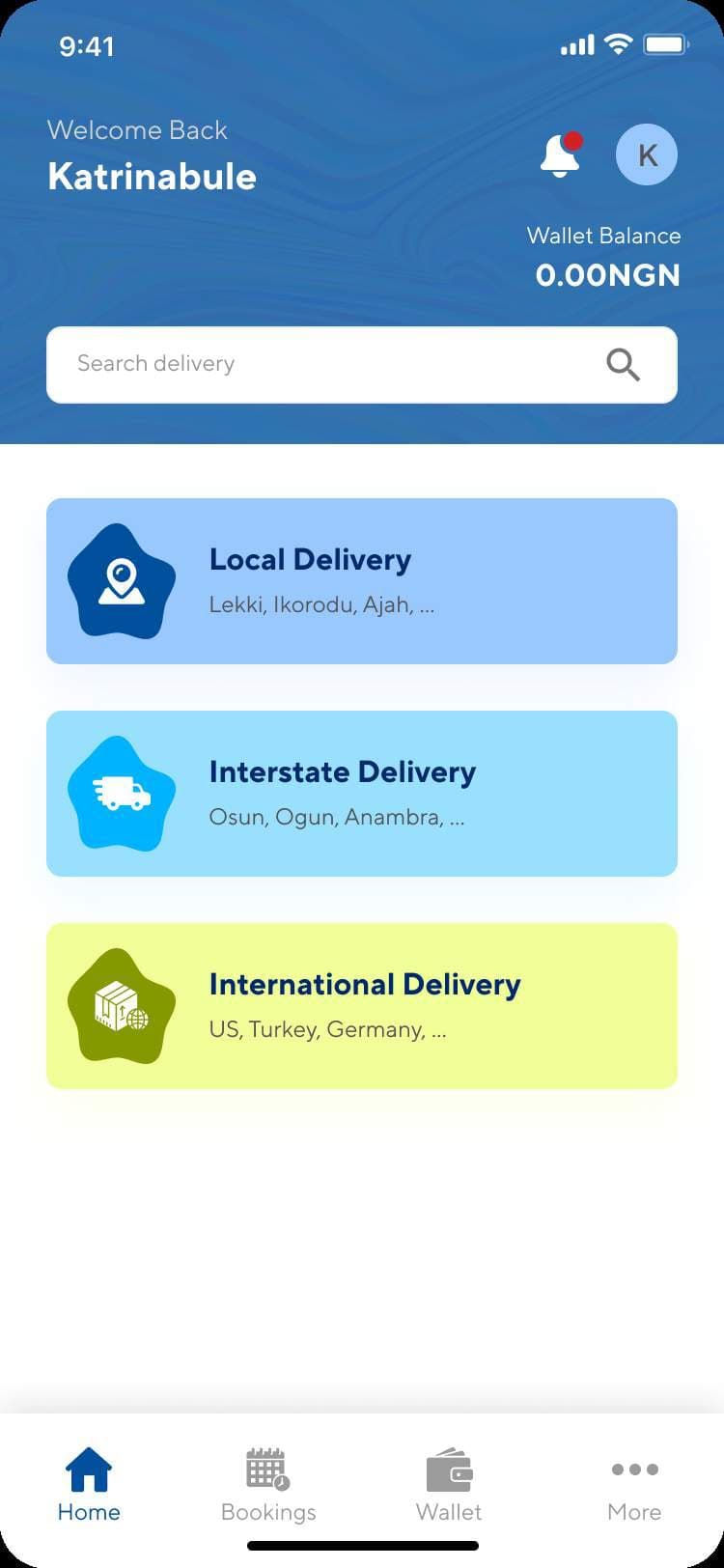
Home with local, interstate and international delivery
Local, interstate or international.
Comparing four delivery services with prices
Compare couriers, then choose.
Wallet with balance and transaction history
A wallet with escrow behind it.

Web

For partners: a web platform to run a delivery business.

Partner dashboard with delivery analytics
Delivery analytics at a glance.
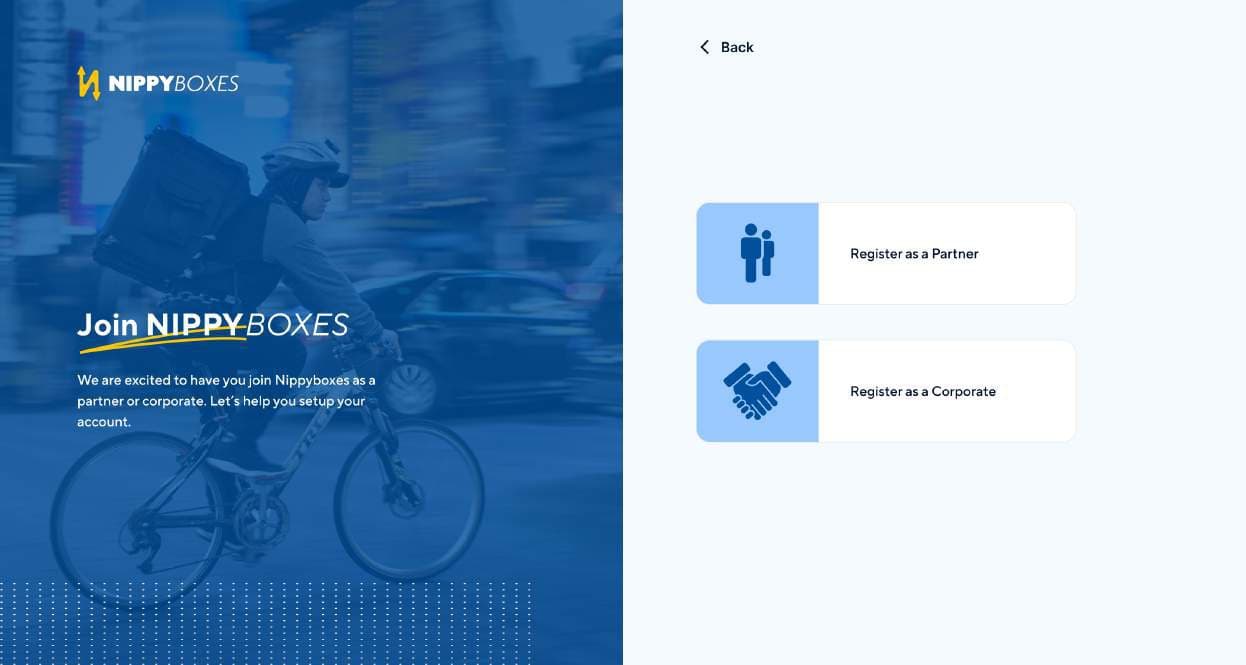
Partner onboarding choosing partner type
Guided partner onboarding.
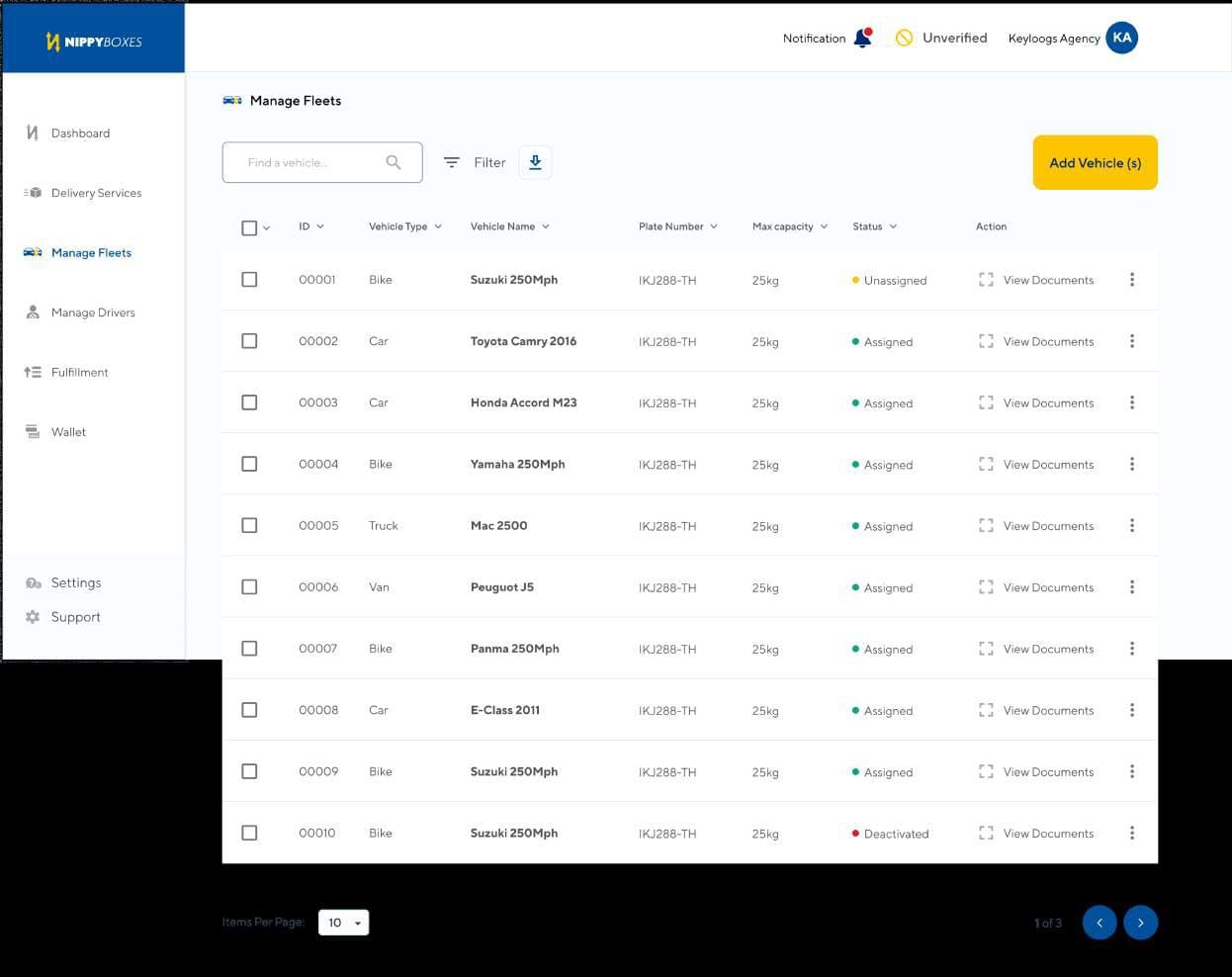
Manage fleets table
Managing active and inactive fleets.
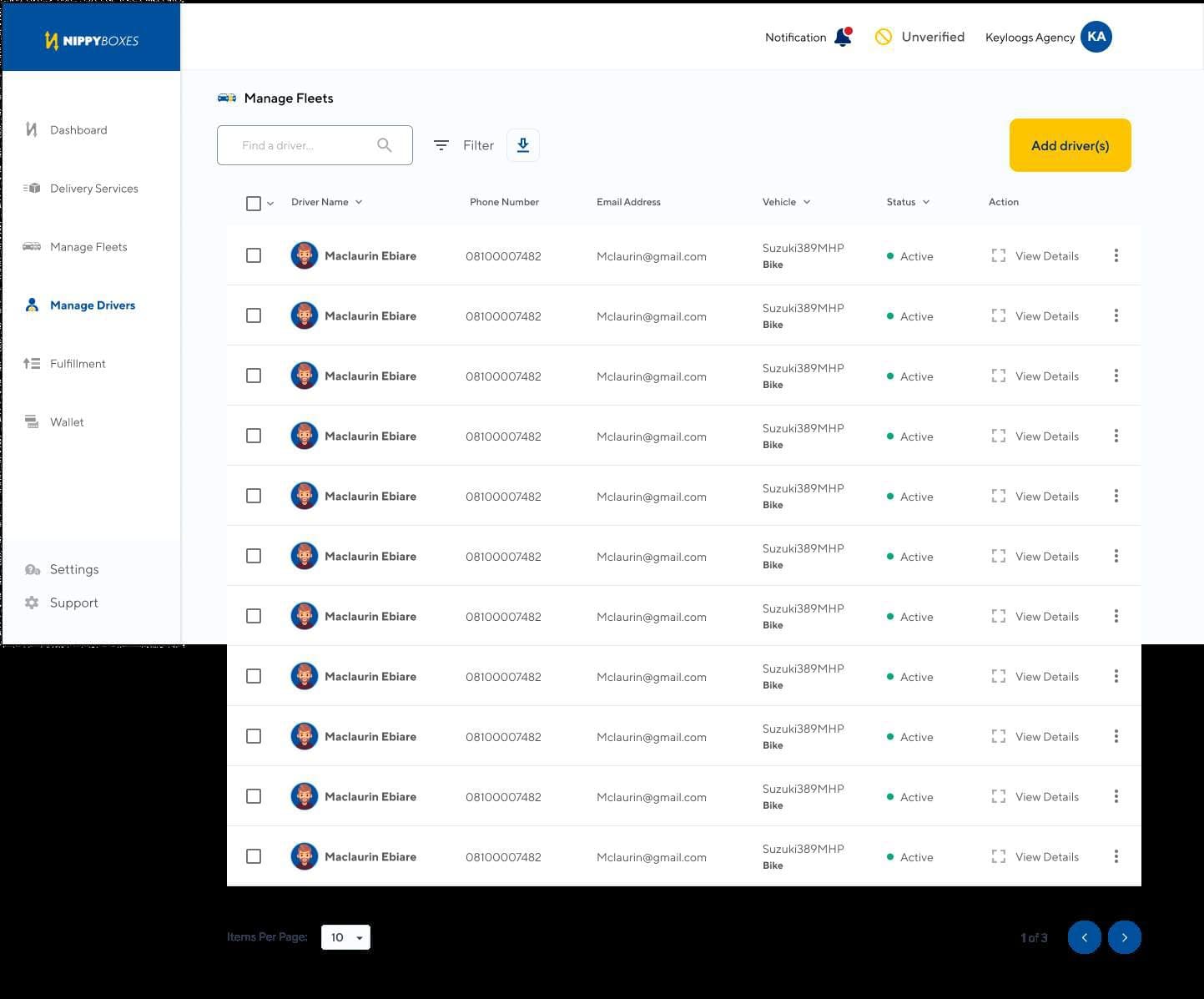
Manage drivers table
Inviting and monitoring drivers.

Outcomes

A two-sided marketplace that filled up fast.

  • 10,000+ users in the first month after launch
  • 50+ vendors and 200+ riders and drivers on the platform at launch
  • Price comparison across logistics providers
  • Weight-based estimates for fairer pricing
  • Seamless onboarding for customers and partners
  • Parcel tracking and a wallet with escrow
  • Testing confirmed easier onboarding and strong interest in price comparison; it also showed assigning drivers was hard and the landing page undersold the product, both fed into the next iteration